We use the latest cutting edge engineering tools to ensure a perfect product every time
EDGECAM is intelligent manufacturing software that streamlines production workflows. It offers feature-based manufacturing, intuitive interfaces, and knowledge-based machining. By optimizing toolpaths, reducing costs, and improving quality, EDGECAM enhances the entire manufacturing process.
HYPERMILL is a modular and flexible CAM solution for 2.5D, 3D, and 5-axis milling, as well as mill turning and machining operations. It seamlessly integrates high-speed cutting (HSC) and high-performance cutting (HPC) within a single interface. With HYPERMILL, we can optimize processes, enhance component quality, and achieve efficient machining.
VISI is a CAD/CAM solution tailored for the mould and die industries. It offers 3D tool design, plastic flow analysis, sheet metal stamping, and fully integrated wireframe, surface, and solid modeling. With comprehensive 2D, 3D, and 5-axis machining strategies, VISI optimizes manufacturing processes, enhances component quality, and ensures efficient machining
SOLIDWORKS is an integrated design-to-manufacturing solution that bridges the gap between client design and our manufacturing teams. By working concurrently in a single environment, it eliminates data translation delays and reduces errors. With tools for concept design, parts, and assemblies, SOLIDWORKS streamlines product development, ensuring smarter, faster, and easier manufacturing processes.

Autodesk Fusion 360 is a comprehensive 3D modeling and design software that plays a pivotal role in enabling effective Design for Manufacturing (DFM).We can use the design aspects of it to create models based on customer technical specifications. It aims to streamline the production process by identifying potential bottlenecks, reducing material waste, and enhancing overall manufacturing efficiency. With integrated computer-aided manufacturing (CAM) functionality, toolpath optimization, simulation, and support for various manufacturing methods.
AutoCAD, a powerful Computer-Aided Design (CAD) software, plays a crucial role in manufacturing. It simplifies creating drawings, diagrams, and digitizing blueprints. We use it to make two-dimensional or three-dimensional models based on customer designs. For manufacturing, AutoCAD aids in prototyping, creating high-quality final products, and optimizing production efficiency. Its time-saving features, precision, and versatility make it an indispensable tool for modern manufacturing processes
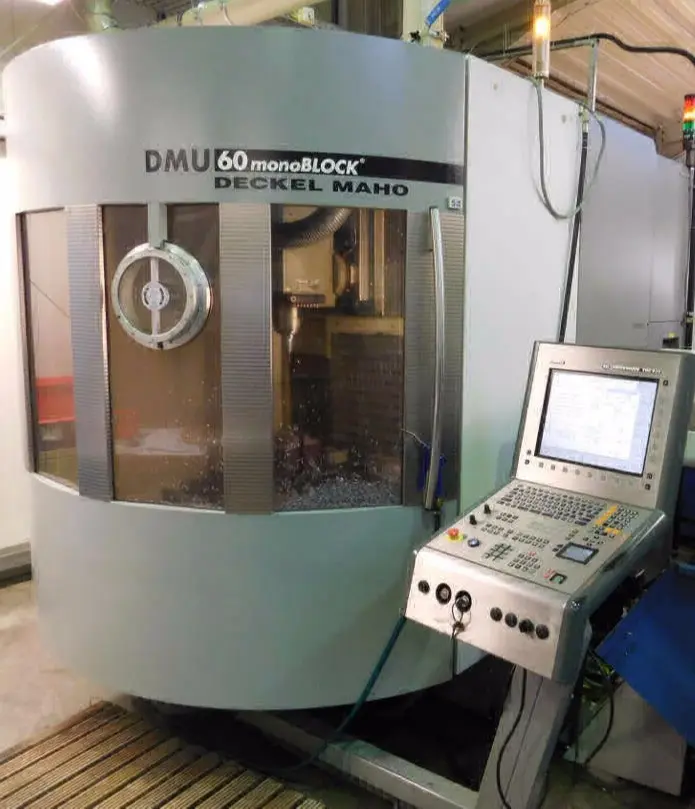
3-Axis CNC Machining:
•Definition: In 3-axis machining, a computer-controlled cutting tool moves along three primary axes: X (side-to-•side), Y (front-to-back), and Z (up-and-down).
•Application: Ideal for producing parts with relatively simple geometries.
•Process: Material removal occurs by precisely following programmed toolpaths.
•Advantages: Simplicity, versatility, and suitability for straightforward shapes.
4-Axis CNC Machining:
•Definition: 4-axis machines can rotate about an additional axis (usually the A-axis or rotary axis).
•Application: Enables machining of more complex shapes, such as cylindrical features or curved surfaces.
•Process: The workpiece can be rotated during machining, allowing access to different angles.
•Advantages: Enhanced versatility and the ability to create intricate contours.
5-Axis CNC Machining:
•Definition: 5-axis machining adds two rotary axes (usually A and B) to the X, Y, and Z axes.
•Application: Used for highly complex parts with compound curves, undercuts, and irregular surfaces.
•Process: Simultaneous movement along all five axes allows intricate shaping from various angles.
•Advantages: Unparalleled flexibility, reduced setup time, and precise machining of complex geometries.
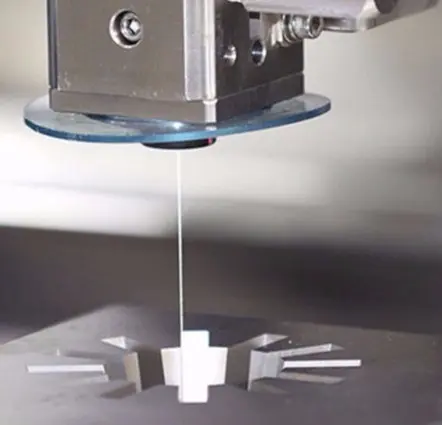
4-Axis Wire EDM is a precision manufacturing method that enables the creation of intricate geometries with gradual transitions. Here’s how it works:
Traditional Wire EDM Process:
•During standard wire EDM, upper and lower guides control the wire position.
•Tiny precision guide tubes hold the wire, ensuring extreme accuracy.
•Both guides move in identical directions, keeping the wire straight as it cuts material.
4-Axis Capability:
•In 4-axis wire EDM, the upper and lower guides can move independently.
•For example, the upper guide may move in a circular motion while the lower guide moves in a square motion.
•This allows gradual transitions between shapes, achieving complex geometries.
Advantages Over Precision Machining:
•4-axis wire EDM surpasses CNC turning and milling in certain scenarios.
•CNC Turning: For parts with different internal and external geometries, wire EDM excels.
•CNC Milling: Small, intricate features (like Ziploc bag seals) are better suited for 4-axis wire EDM.
Common Applications:
•Wrapping Tools: Creating tools for coating applications with tapered ends and notches.
•Molds: Achieving precise tapers for tight-fitting mold assemblies.
In summary, 4-axis wire EDM offers high precision and flexibility, making it ideal for complex parts in modern manufacturing processes.
What is a CNC Lathe?
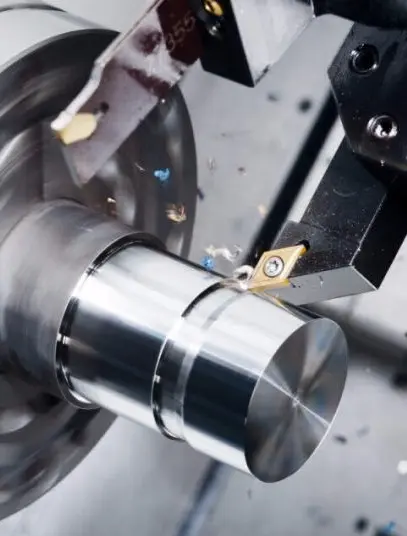
A CNC lathe is a sophisticated machine tool designed for precision CNC turning and manufacturing through Computer Numerical Control (CNC). It’s an embodiment of technological evolution, marrying the age-old principles of a lathe machine with advanced computer programming to achieve unprecedented accuracy and efficiency in machining. The CNC lathe machine tool has revolutionized how materials are manipulated, making it an indispensable tool in various industries and many machine shops. Its ability to perform intricate cutting and shaping with incredible precision makes it a cornerstone in modern manufacturing processes. Whether it’s metal, plastic, or wood, the CNC lathe’s versatility in handling diverse materials is unmatched.
How Does a CNC Lathe Machine Work?
A CNC lathe operates by rotating a workpiece on its axis while a cutting tool moves in different directions to remove material from the workpiece and shape it into the desired form. The cutting tool is held in a tool turret, allowing precise control over its movement. Computerized controls dictate the motion and operation of the cutting tool, ensuring consistent and accurate machining. Whether it’s creating intricate threads, turning cylindrical parts, or producing complex contours, the CNC lathe delivers exceptional results.
MIG Welding (Metal Inert Gas):
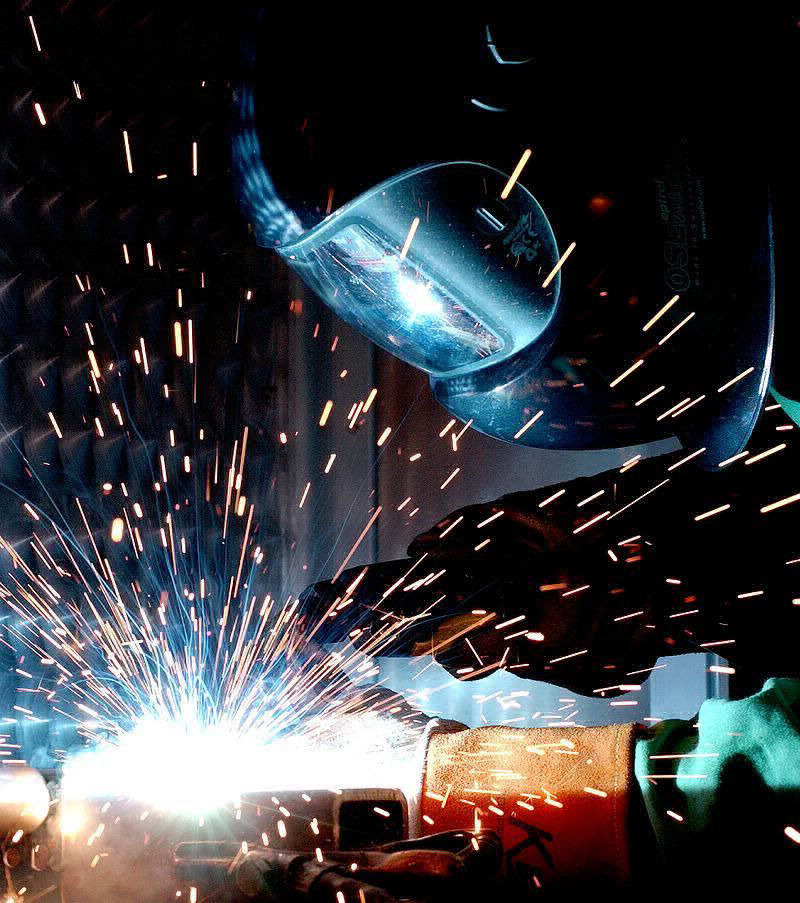
•Process: MIG welding uses a wire electrode that feeds through a welding gun and melts in an electric arc to join metal pieces together.
•Advantages: Simple to master, widely used by professionals and hobbyists.
•Application: Ideal for various materials and thicknesses.
•Shielding: Requires a shielding gas (usually argon or a mix) to protect the weld from atmospheric contamination.
•Polarity: Set leads to DCEP polarity for stable arcs and good welds.
TIG Welding (Tungsten Inert Gas):
•Process: TIG welding uses a non-melting tungsten electrode to create an arc while shielding the material with inert gas (argon or helium).
•Advantages: Precise, clean, and versatile.
•Application: Commonly used for thin materials, critical joints, and intricate designs.
•Polarity: Requires AC or DCEN polarity.
Stick Welding (Shielded Metal Arc Welding):
•Process: Stick welding uses a consumable electrode coated with flux. The flux creates a protective slag layer during welding.
•Advantages: Versatile, works well in outdoor conditions.
•Application: Suitable for heavy construction, and repairs.
•Polarity: Can use both DCEN and DCEP.
Flux-Cored Arc Welding (FCAW):
•Process: Similar to MIG welding but uses a tubular wire filled with flux.
•Advantages: High deposition rates, works well on thick materials.
•Application: Construction, shipbuilding, and heavy fabrication.
•Shielding: The flux creates a protective slag layer.
Gas Tungsten Arc Welding (GTAW):
•Process: Uses a non-consumable tungsten electrode and inert gas (usually argon) for shielding.
•Advantages: Precise, clean, and excellent for thin materials.
•Application: High-quality welds.
•Polarity: Requires DCEN or AC.
Drag & Drop Website Builder